
 Aggie to Cobby
 Copper to Legend
 Lisa to Peader
 Peggy to Wispa
The History of the Sanctuary
This article was written in 2006.
The changing role of donkeys in Ireland.
The Sathya Sai Sanctuary was founded in 1991 for the purpose of rescuing Ireland's 'lost' donkeys, most of which are elderly, sick or injured.
Once a valuable part of the national heritage these animals had spent their lives working on farms hauling, ploughing, harrowing, sowing and reaping, and on the bogs bringing turf for the hearths.
With the advent of the tractor and other farm machinery the donkey soon became redundant and now no longer fits into a world geared for profit and productivity.
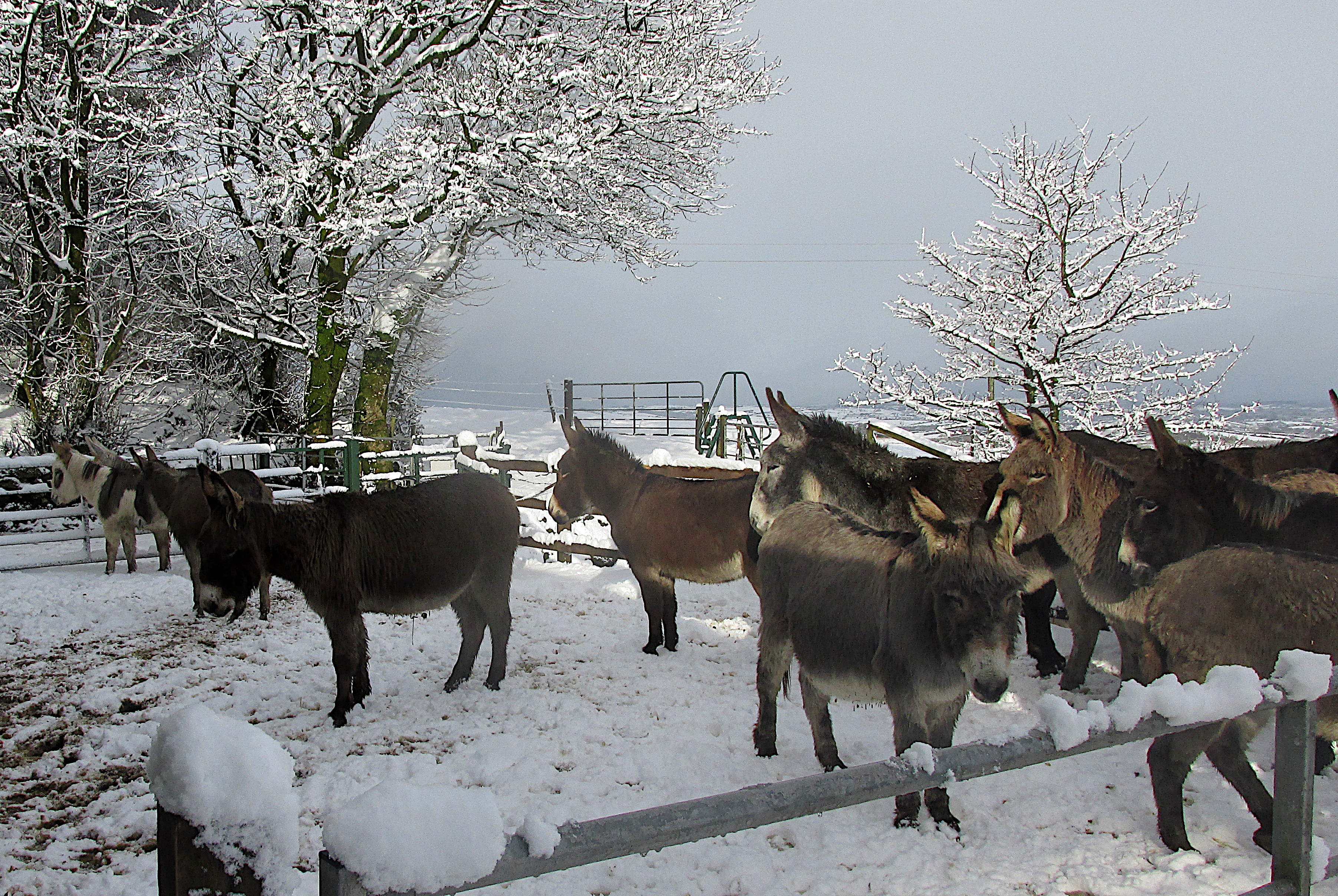
Many such animals were shipped by live transport to the Continent, especially Italy where they were used in salami; others were simply sent to the knackers as unwanted.
The lucky ones remained on the farm where, to this day, a donkey's presence is considered good luck. These are the ones that still come into care on a regular basis as their elderly owners go into homes, hospitals or die, leaving younger people to inherit a farm they have little chance of working in today's economic climate.
Condition.
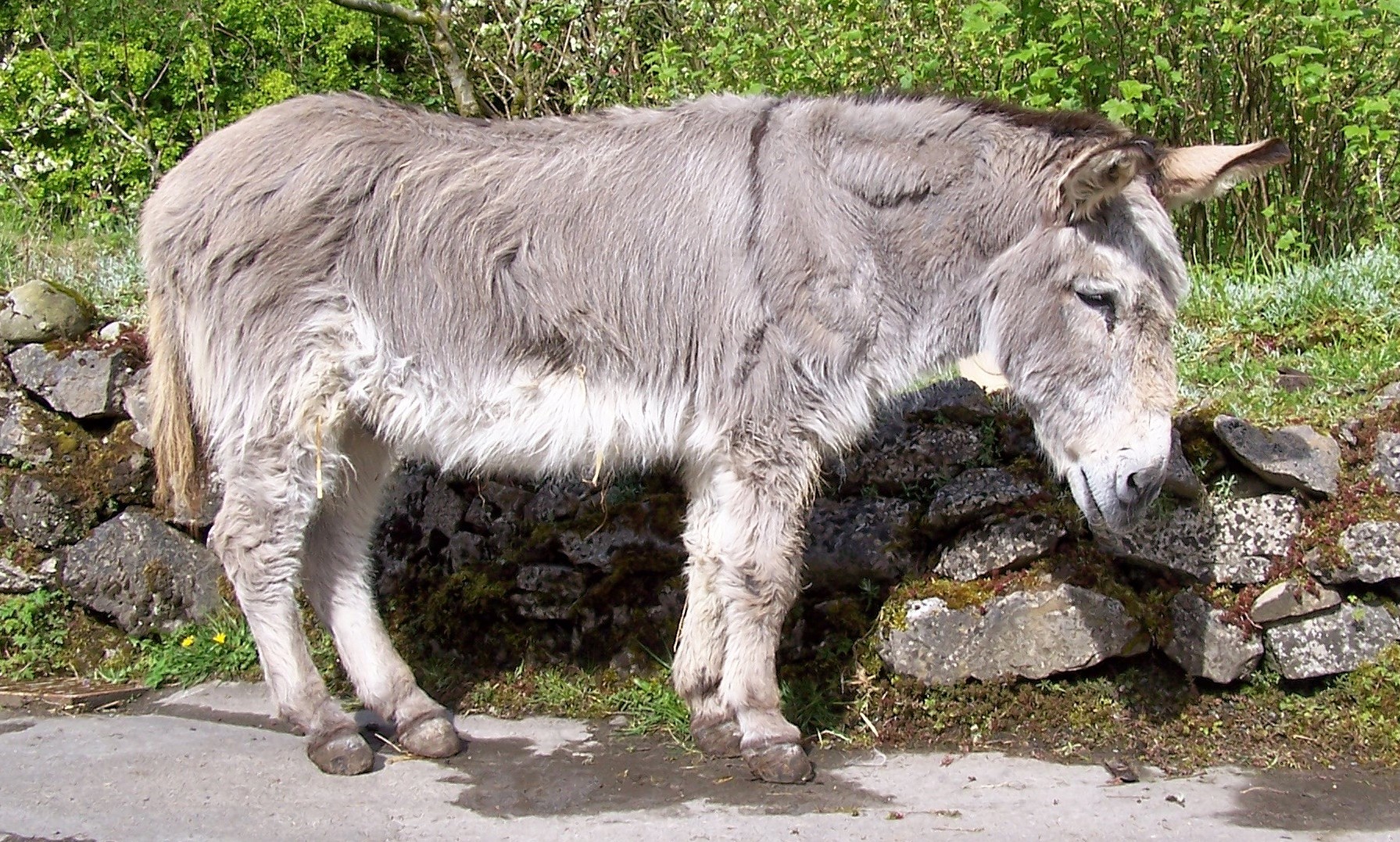
Almost without exception, donkeys taken into care at the Sanctuary arrive in poor condition. Most notable is the state of their hooves which are invariably either severely overgrown, laminitic or very badly managed, resulting in the symbiotic complaints of overshot fetlock joints, damaged knees and arthritis. Many suffer with spinal problems due to being asked to pull or carry loads too heavy for their small frame and almost all will suffer some level of parasite damage.
Over the years the Sanctuary's work has extended to mules, ponies and a few larger horses. Numbers in care vary: young healthy donkeys may be placed in foster homes but the majority of intakes are too damaged to go elsewhere and live out their lives in the peaceful surroundings of the Bricklieve Hills.
The land, buildings and outbuildings.
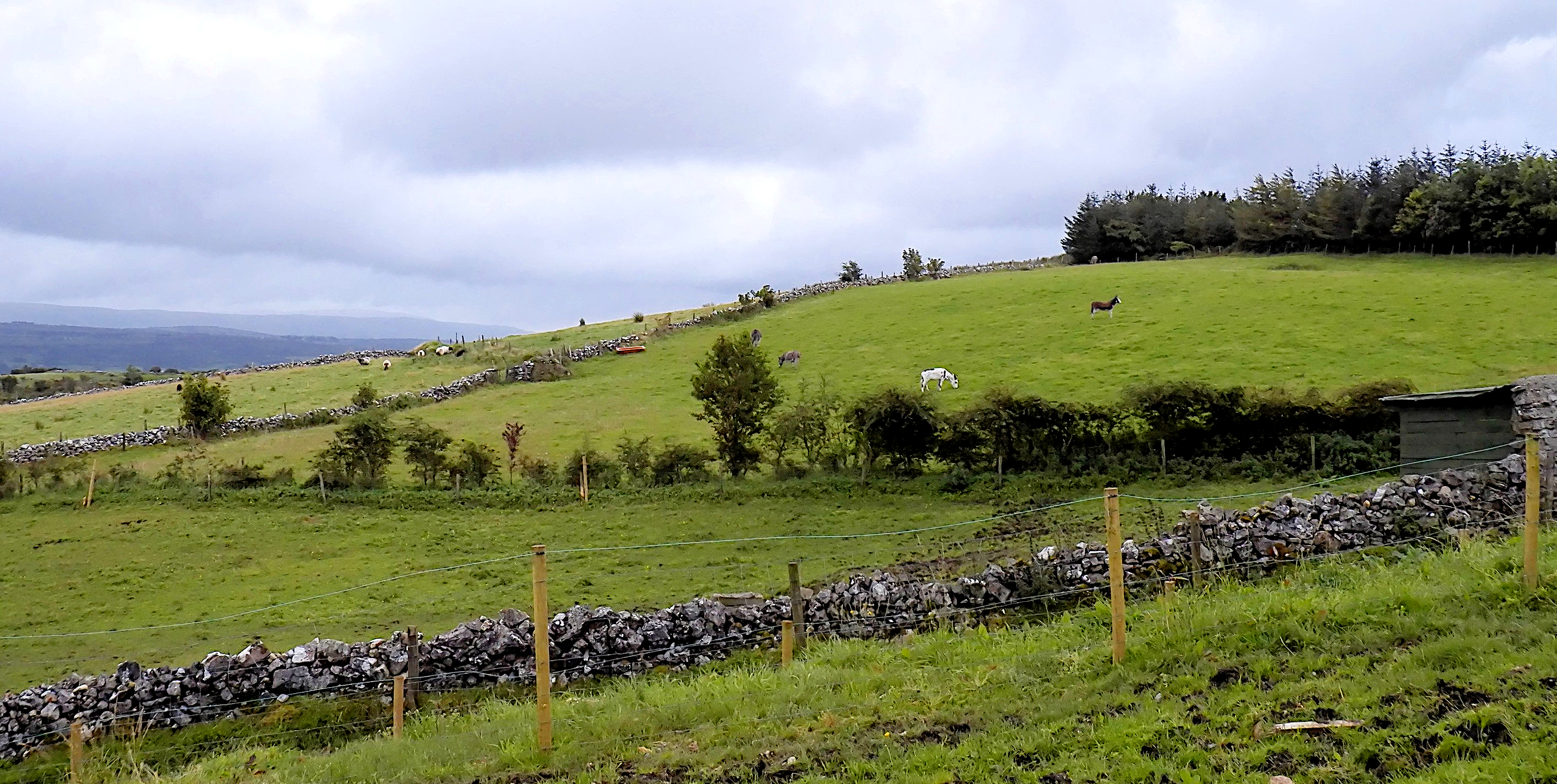
By 2006 the Sanctuary occupied 18 acres of medium quality land but it has grown over the years as adjoining land became available and funds allowed.
The land is very scenic as we are situated adjacent to the Carrowkeel megalithic site 5 km (two and a half miles) from Castlebaldwin, Co. Sligo in the unspoilt northwest of Ireland.
The outbuildings consist of two large barns which are approximately 30ft x 40ft.
The barns used to have a central 20ft x 30ft haybarn, for storage and distribution of hay and straw, but are now a large open plan space divided by walls with gates.
There is a full length extension at the rear with access to the field.
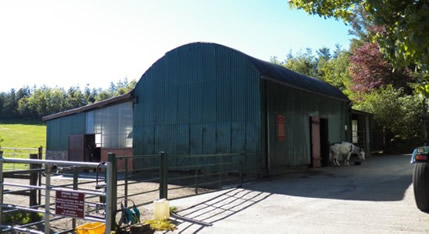
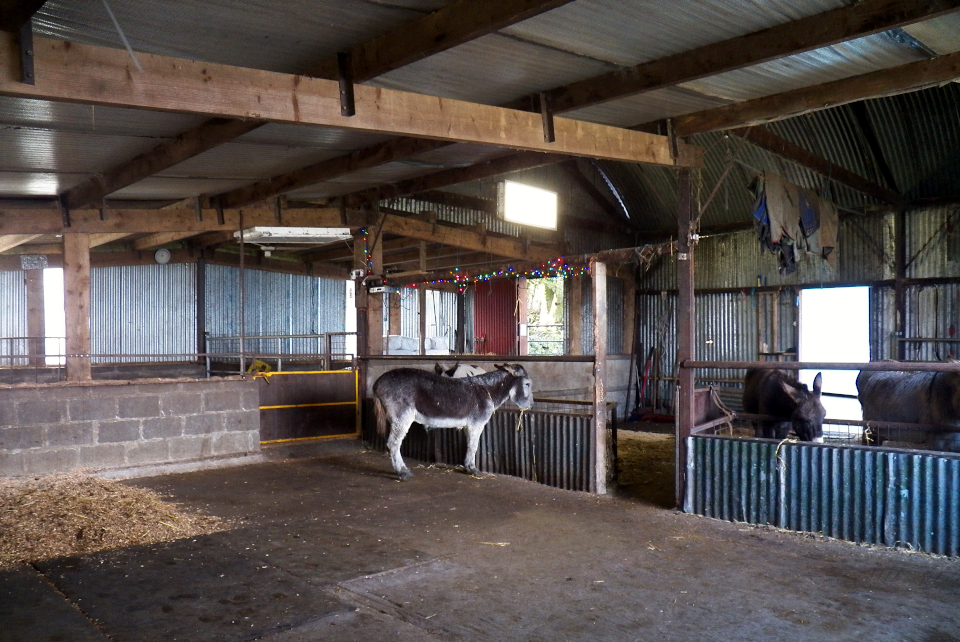
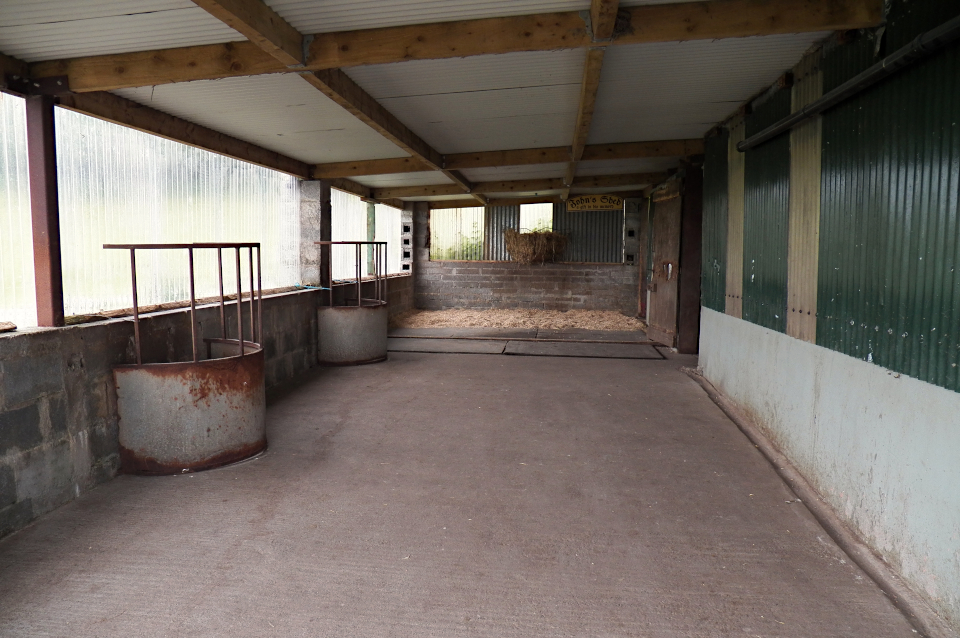
Nearer to the main house are two smaller stone animal sheds. One with direct field access and a 20ft x 30ft general storage barn with integral toilet facility, a narrow adjoining shed used as a feed shed and a renovated, stone faced and very well insulated workshop/storage shed, also approx 20ft x 30ft.
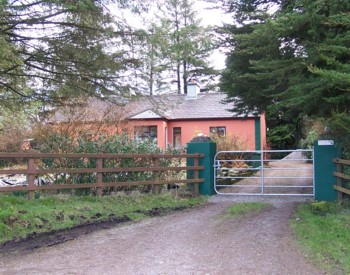
There are 5 substantial field shelters serving the land, plus the shed mentioned above which has direct access to the land. The land itself is divided into five fields, so each field is serviced by a shelter. There is also a small information centre.
The perimeter and subsections of the land are all well fenced with 3ft sheep netting and one top strand of electric wire from a mains electric fencing unit. All fields are accessible internally by farm gates which are all properly hung and working.
Because the site is high and exposed in winter, great attention has been paid to the planting of shelter belts of mixed softwoods and hardwoods, some of which are now semi mature whilst others are only a few years old.
Education
During the early years of the Sanctuary the founder gave educational talks in local schools which proved popular. It is now more usual for the Sai Sanctuary to host school outings at the Sanctuary itself for 'hands-on' experience.
Other group visits include children and adults with disabilities, young people with behavioural/emotional difficulties, adults with learning difficulties, playgroups and occasional work outings.
Funding:
In 2003 the Department of Agriculture and Food awarded us an ex-gratia payment of €4500 to build a small educational information centre which displays a collection of old working harness, tools, photographs and graphics of the welfare issues surrounding the equines of Ireland. These are of particular interest to foreign visitors who visit Ireland on holiday or to research and enjoy its unique culture. Being adjacent to the megalithic site attracts many casual visitors who often become regular sponsors and correspondents. The Department of Agriculture has continued to support the work of the Sai Sanctuary until the present day.
Over the years the Department of Agriculture has supported us with a Welfare Payment on receipt of a comprehensive Application, which all registered charities are invited to complete on an annual basis. The payment has increased over the years as the Sanctuary, and it's costs, have grown. In 2021 it provided €20,000 of the €95,000 needed to run the Sanctuary for the Year and was an enormous help towards the cost of farriers, vets, feed, bedding, transport etc.
A rest home for donkeys and ponies
Copyright © 2025 Sathya Sai Sanctuary
Charity No. CHY10840
Equine Herd No. U324043